Few journeys capture the history of English pilgrimage quite like the walk from Winchester to Canterbury.
For centuries, pilgrims travelled east towards Canterbury Cathedral, drawn by the reputation of Thomas Becket, the Archbishop of Canterbury murdered in 1170. His death transformed Canterbury into one of the most important pilgrimage destinations in medieval Europe, attracting visitors from across Britain and the continent.
Today, the Pilgrims' Way offers modern walkers an opportunity to experience this remarkable history while travelling through some of the most attractive countryside in southern England.
It is a journey of chalk hills, ancient churches, medieval towns and quiet woodland paths, with Canterbury Cathedral providing a suitably impressive destination.
Why did medieval pilgrims travel to Canterbury?
The story begins with Thomas Becket.
Becket was Archbishop of Canterbury during the reign of Henry II. Following a bitter disagreement with the king, he was murdered by four knights inside Canterbury Cathedral on 29 December 1170.
Almost immediately, reports of miracles associated with his tomb began to spread. Canterbury developed into a major centre of Christian pilgrimage, with visitors travelling considerable distances to pray at his shrine.
The journey became so culturally significant that Geoffrey Chaucer used it as the setting for his famous fourteenth-century work, The Canterbury Tales.
Chaucer's fictional pilgrims set out from Southwark, telling stories along the road. The historical routes were more varied, however, and the Winchester-to-Canterbury journey became one of the best-known approaches to the shrine.
There is something particularly appealing about following a route that has connected travellers, faith and storytelling for more than eight centuries.
Starting in Winchester
Winchester makes a wonderful place to begin.
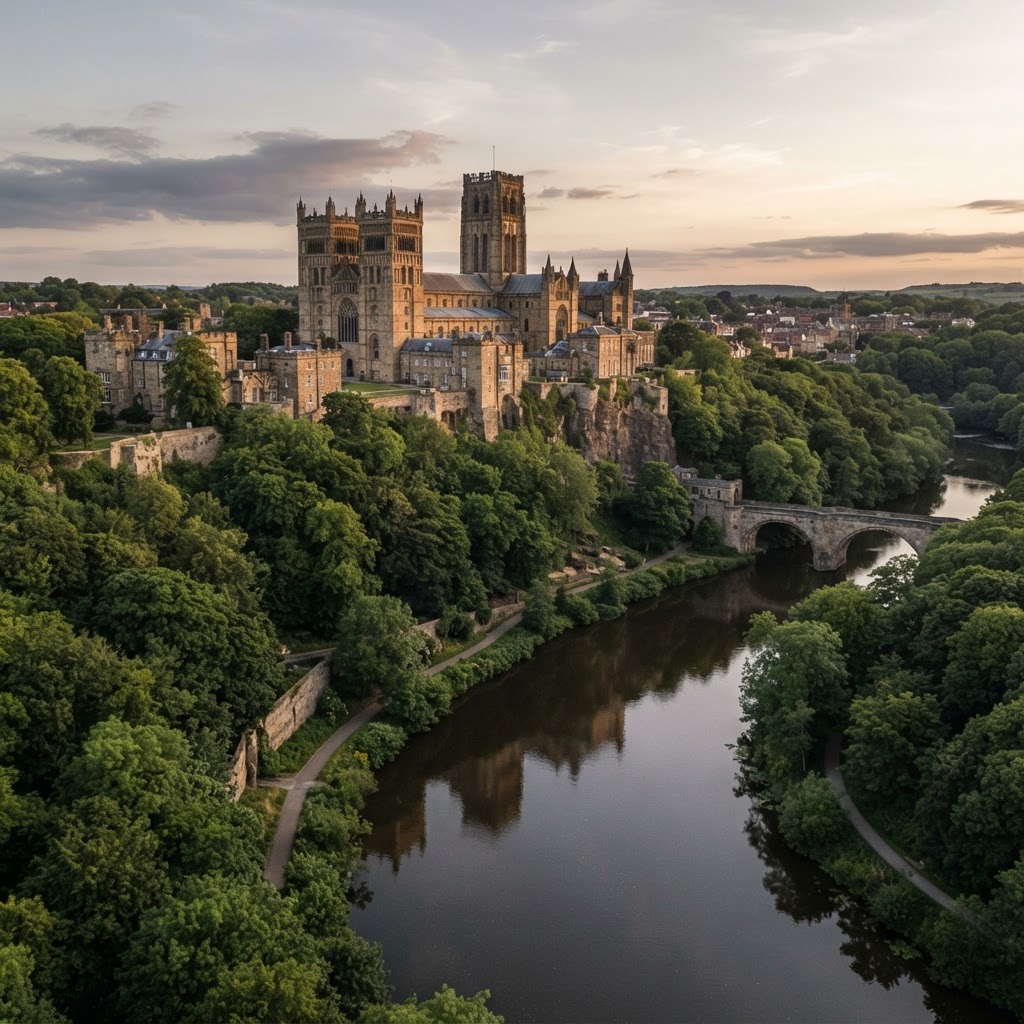
The cathedral is one of England's great medieval buildings and provides a natural starting point for anyone interested in the country's religious history.
Before setting out, it is worth spending time exploring the historic centre. The city was once the capital of Wessex and retains an extraordinary collection of medieval buildings and religious landmarks.
The route heads east towards Farnham, following the landscape of the North Downs and connecting a series of historic settlements.
One of the interesting aspects of the Pilgrims' Way is the way it interacts with the geography of southern England. The chalk ridge provides a natural route through the countryside, while springs and rivers emerging from the downs helped sustain the villages that developed along its southern slopes.
These settlements became natural stopping points for travellers, offering churches, inns and places of hospitality.
The North Downs: a landscape made for walking
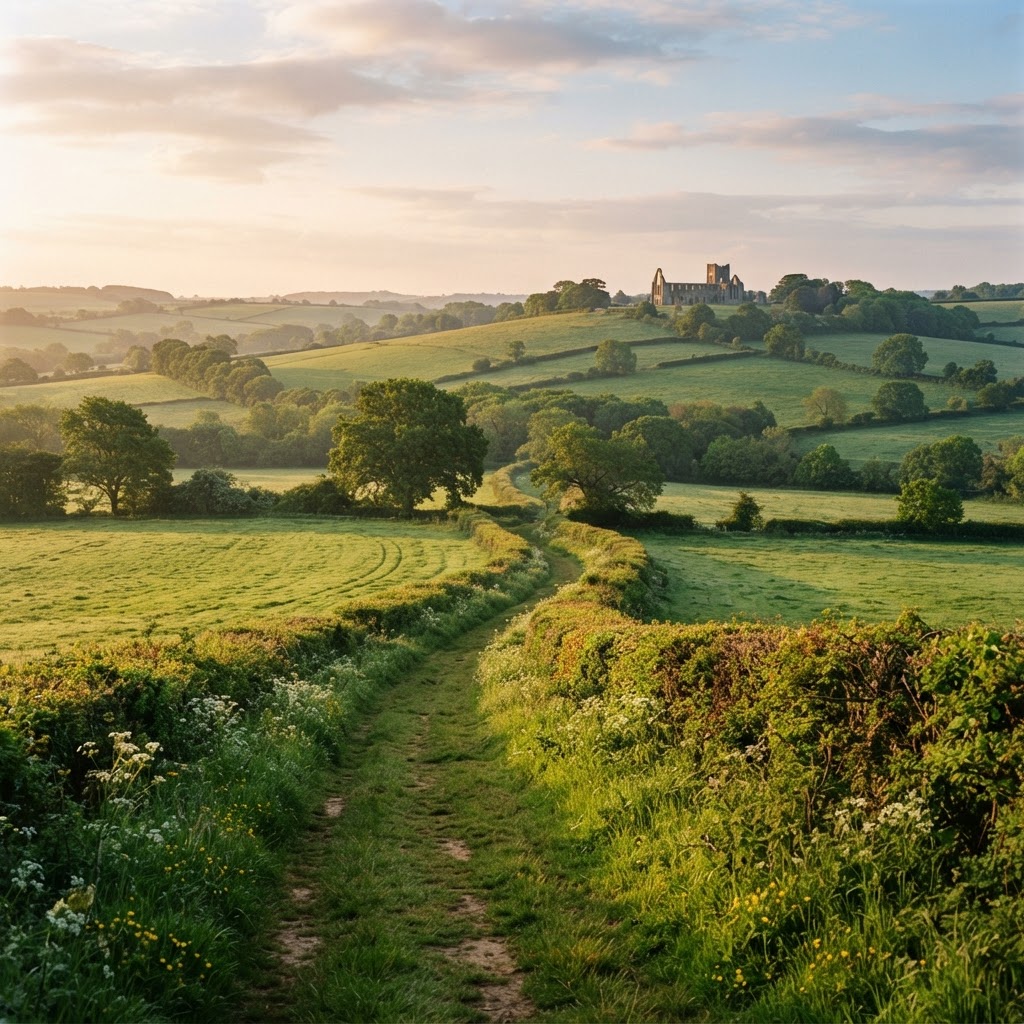
The countryside between Hampshire, Surrey and Kent is one of the real pleasures of this pilgrimage.
Expect rolling chalk hills, woodland, farmland and occasional panoramic views across the surrounding countryside.
Farnham is an excellent early stop, with its castle and historic centre. Further along, Guildford offers another opportunity to explore the region's heritage.
St Martha's Hill is one of the more memorable landmarks. Its hilltop church, surrounded by woodland and overlooking the Surrey countryside, is an atmospheric place to pause.
Further east, the route passes through the Medway region and towards Rochester, whose cathedral and castle provide another fascinating encounter with England's medieval past.
The final stages take walkers through Kent, where traditional villages, orchards and historic buildings gradually give way to the outskirts of Canterbury.
This is a route where it is worth allowing time for diversions. Some of the most rewarding moments are found away from the main path, whether in a small parish church or a village pub that has been welcoming travellers for generations.
Arriving at Canterbury Cathedral
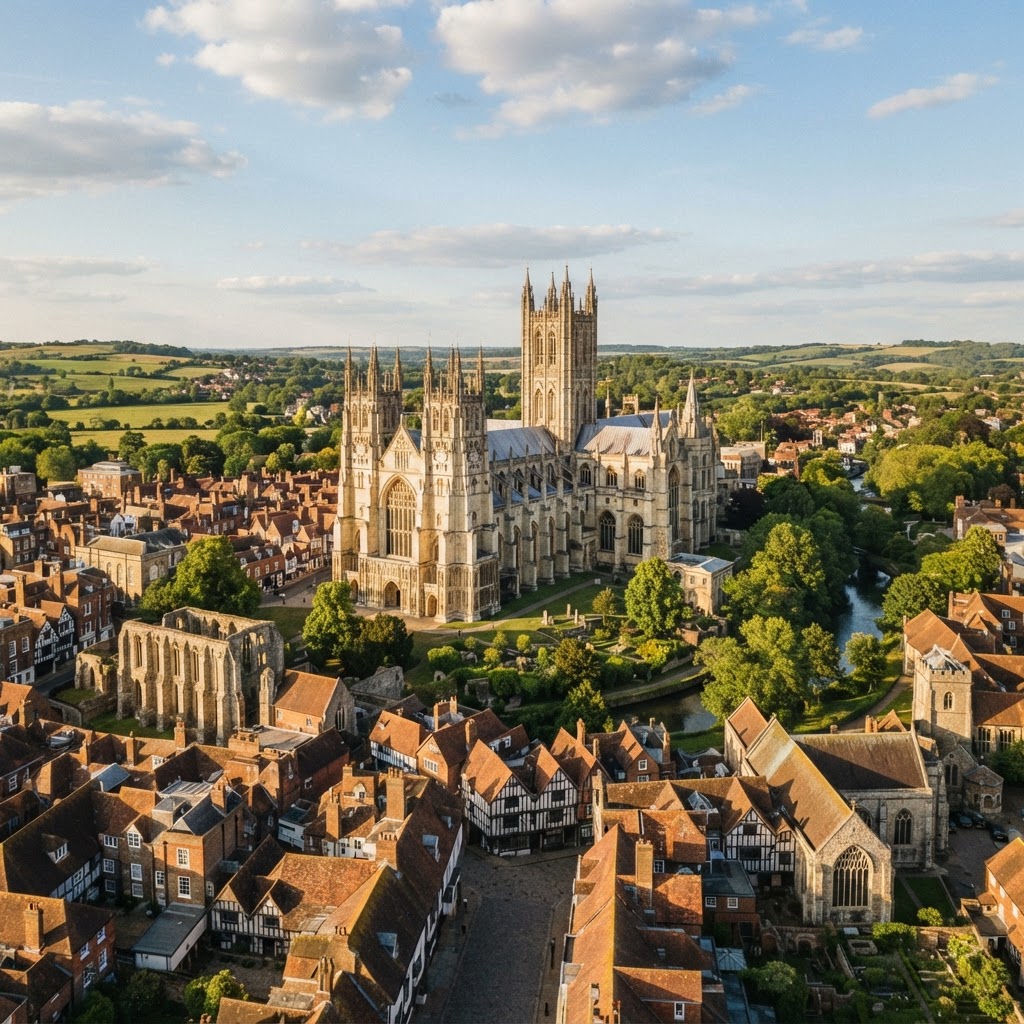
The arrival in Canterbury is the moment towards which the entire journey has been building.
Canterbury Cathedral is a UNESCO World Heritage Site and remains one of the most important Christian buildings in Britain.
Walking through the historic streets towards the cathedral, it is easy to appreciate why medieval pilgrims considered reaching this destination such a significant achievement.
The cathedral itself deserves a proper visit. Its architecture, stained glass, chapels and long association with pilgrimage make it an extraordinary place to explore.
It is also worth visiting the remains of St Augustine's Abbey and St Martin's Church, both important parts of Canterbury's early Christian history.
Rather than treating Canterbury as simply the end of a walking holiday, I would recommend allowing at least a full day to explore the city.
How long does the Pilgrims' Way take?
The Winchester-to-Canterbury route is commonly presented as approximately 130 miles on Pilgrim Stays UK, although published itineraries and the precise route alignment vary. The British Pilgrimage Trust describes a 153-mile version.
Most walkers should allow around 10 to 14 days, depending on their chosen itinerary, daily mileage and opportunities for rest.
Some of the main overnight locations include:
- Winchester
- Farnham
- Guildford and the surrounding villages
- Rochester and the Medway area
- Maidstone
- Canterbury
These are not necessarily fixed daily stages. The best approach is to work out your walking distances first and then arrange overnight accommodation accordingly.
The route is particularly attractive between late spring and early autumn, when the countryside is at its best and daylight hours are generous. Even so, waterproof clothing and good footwear are essential.
Finding accommodation along the way
One of the challenges of walking a pilgrimage over ten or more days is organising somewhere to sleep every evening.
Unlike a conventional walking holiday based in one location, the Pilgrims' Way requires a succession of overnight stays, often in different towns and villages.
Pilgrim Stays UK was created with precisely this kind of journey in mind. Its route-planning platform allows pilgrims to explore accommodation along the Pilgrims' Way and organise their overnight stops around their walking itinerary. You can also search for accommodation by town or browse all our routes to compare options.
For a route of this length, having the accommodation side organised before departure can make the entire experience considerably more enjoyable.
The Pilgrims' Way is not simply a walk through the English countryside. It is a journey through the history of faith, architecture and hospitality, ending at one of the most important Christian destinations in Europe.
For anyone interested in discovering Britain's pilgrimage heritage, it is difficult to think of a more rewarding place to start.
Useful route resources: British Pilgrimage Trust, Canterbury Cathedral and the North Downs Way National Trail.